Monday, November 23, 2009

Group Topic 2: Buddhism in Dunhuang


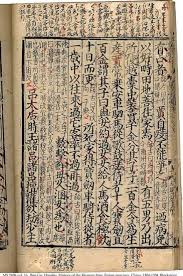
It’s interesting to know how Dunhuang, a small town in present-day Gansu Province, western China, is filled with so many rich histories. Dunhuang was a convenient ‘meeting place’ for many people travelling along the Silk Road, for it had many temples to various faiths and natural resources. The reason that Dunhuang was able to surpass the traditional monarchy and become a ‘modern culture’ was due to having several failing rulers who failed to establish a political system. In other words, there was nothing preventing the people in Dunhuang from learning about other religions and cultures and including them into their own lifestyles. Buddhism certainly has influenced people’s lives in Dunhuang in little ways such as drinking tea and meditating. In addition, people celebrated holidays and festivals, attended ceremonies with the monks. The paintings found in the caves painted by the monks reflect people’s daily lives in Dunhuang. From the remaining paintings, letters, and manuscripts written by Buddhists we can somewhat reconstruct a blurry picture of the actual practice of Buddhism in the Dunhuang region but more information would be needed to fully paint the whole picture.

Tuesday, November 10, 2009

What is Buddhism?

The topic Buddhism did not particularly interest me this week. I could not possibly engage with the writer and believe that there was such a person named, Buddha who was able to achieve enlightenment and taught people to turn away from evil desires in this world.

What is so special about this man? What has attracted people over the centuries and millennium to continue following this religion? Why is it listed as the world's fourth largest religion, and how?

At the end of the day, Buddhism is a religion we can hold on to and by believing, we can feel better about ourselves for all the ‘bad’ things we have done. Knowing that we can do good deeds to cleanse away all the ‘bad’ things we have committed before. Then, what can be considered good deeds? Feeding the poor? Donating money to charities? Or, doing volunteer work? After all, Buddha himself was a human being, and what is there to prove that those are actually good deeds? In Xuanzang’s story, he mentioned that one of Buddha’s last words presumed to be were, “All that is composed is perishable. Work diligently for your salvation.” I am uncertain about why we need to work for salvation because we will get nothing in return. We can still practice doing good things and not believe in Buddhism at all.

Standing in a scholar’s point of view, I should not be thinking about those questions but understand how does Buddhism impact lives and why. I believe that in order to understand the whole purpose of Buddhism; it would be beneficial to have some sort of prior experience. To understand something not only requires looking at the physical actions but also being aware of people’s mentality behind doing all the rituals, customs, and daily practices. At the end of the day, we can say anything that we want about a particular religion but we will never truly understand it until we become one of them.

Monday, October 19, 2009

Blog Entry #3, October 19, 2009


After reading about the Sogdians in Wood’s textbook, Marshak and Negmotov’s Sogdiana and the translation of the “Ancient Sogdian Letters,” I realized how unfortunate this group of people was. During the beginning ages of the Silk Road, the Sogdian’s empire played a large role in the Silk Route by having Sogdian merchants entirely controlling the Silk Road. Even though, they had the knowledge for business, their empire was not strong enough to prevent outside invaders. The Sogdians were always under the control of other empires. Thus, this leads the Sogdians to be unknown of, despite of their works.
On the other hand, we can view the Sogdians as heroes rather than unfortunates because they were the ones after all, who spread a new style of fashion, art and architecture, scripts and religion along the Silk Road. In particular, the buildings of a house, at first were simple, detached, and made of compressed clay and mud brick. Then as time progressed, the houses became more complex, taller, and spacious. Even storekeepers and craftsmen were well off and lived in two-storey houses. Many private houses had murals that depicted daily life or an image of their god and small figures of Sogdians before the fire. It is difficult to know which religion these people followed because of the variety of religions they had. Even with the variety of religions in place, the Sogdians were still able to be better off than anyone else was. This town was not an ordinary town compared to the others during the Silk Road years. The Sogdians were influential regardless of the empires that ruled their state and spread many of their works around Asia. These people were ‘born to their trade’ as the Chinese described them in their stories.
Despite of all of the great work the Sogdians had accomplished, their name is less known to the world today. Having once been powerful, controller of the Silk Routes and spreading the influential arts and architecture, and religion to other regions, it is unfortunate for them that all their hard work is unknown to us. All we can do is appreciate the leftover works from centuries ago.

Monday, October 12, 2009

Blog Entry # 2, October 13, 2009

In Frances Wood’s: The Silk Road: Two Thousand Years in the Heart of Asia, chapter four is about a group of nomads inhabiting China’s northwestern borders and the Han Dynasty (Chinese). This group of nomads known as the Xiongnu has no fixed home and moves according to the seasons from place to place in search for food, water, and grazing land. The Chinese highly disliked this group of people and their Chinese two-character name literally means ‘fierce slaves.’ “The Chinese described the Xiongnu to be good for nothing because they live in the desert and grow in the land that produces no food. They have no houses to shelter themselves, and make no distinction between men and women. They take the entire wilderness as their village and the tents as their homes. They wander to meet in order to exchange goods and stay for a while in order to herd cattle (Wood 50).” Interestingly enough, despite of the way the Chinese viewed them, during the Han Dynasty, the Xiongnu still managed to have power over the Chinese and acquired many of their expensive silk and ornaments. These annual ‘tribute gifts’ amounted to ten percent of the Chinese state revenues.
Another point that I found interesting in this chapter, was that the Chinese were very superstitious in folktales, and thought that Heavenly horses would take them to the heaven gates where they could see God. In addition, these heavenly horses were immortal and they could ride across the dangerous mountains ranges and bring you to the home of immortals. This just shows the lack of education in society during that period. Another reason, people are so fascinated with these horses is that it is rare in China. “They cannot be successfully bred in China due to calcium deficiency in organic matters, even water.” Therefore, these horses were very precious to the Chinese.
Now about the Hou Hanshu, in a way it can be considered a historical reading because it is an old writing and it records many historical figures that we would never be able to know. Even though, the author was not quite precise on each topic and the story he was trying to tell. In most cases, it seemed like the author just decided to throw in all those dates, events, stats, the rulers and their successors and geographic locations together without much further explanation. I cannot agree that it is a complete historical reading but the way the author presented the material was intriguing.
For this reason, since the Hou Hanshu was written so long ago, it is significant to include some ethnographic descriptions. Ethnography is a method used to describe people in writing. The Chinese calling the Xiongnu, ‘fierce slaves’ and the Da Qin described as “the people of this country are all tall and honest.” This is the language that people during that time used even though, it sounds mean in today’s terms. It is important for us to be aware of language used at that time because it will help us understand how different their culture was compared to today.
Overall, Wood and the Hou Hanshu reading revealed many cultural differences and perspective in thinking and works.

Monday, September 21, 2009

Blog Entry # 1, september 22

Overall, I found this book, The Silk Road: Two thousand Years in the Heart of Age, to be an interesting read because there were many new facts that I did not know about. The author was quite descriptive about the topics depicted in each chapter.

I particularly enjoyed reading chapter two about how silk was made because I would have never imagined that it was made by the cocoons of a silkworm. For the first time in my life have I heard such thing called silkworm. It is fascinating to know that many thousands of years ago; tending silkworms was a career for people. Whereas now a days, doing such career would be looked down upon because it’s not part of the society’s career norms. We do not value tending silkworms as much because there are other resources available to help us and there are other fabric materials available to replace silk. I would like to try having silkworm as a pet someday and experiencing all the hard work people back then had to go through.

When reading about the description of the Silk Road, I found it very confusing to follow the names of the cities, towns, provinces, and body of waters presented in the chapters. Additionally, following the types of people who lived near or on the Silk Road was also one of the struggles that I had. Although, there were some challenges, I really enjoyed reading about the different lifestyles and cultures that these people brought to the history of the Silk Road.