
After reading about the Sogdians in Wood’s textbook, Marshak and Negmotov’s Sogdiana and the translation of the “Ancient Sogdian Letters,” I realized how unfortunate this group of people was. During the beginning ages of the Silk Road, the Sogdian’s empire played a large role in the Silk Route by having Sogdian merchants entirely controlling the Silk Road. Even though, they had the knowledge for business, their empire was not strong enough to prevent outside invaders. The Sogdians were always under the control of other empires. Thus, this leads the Sogdians to be unknown of, despite of their works.
On the other hand, we can view the Sogdians as heroes rather than unfortunates because they were the ones after all, who spread a new style of fashion, art and architecture, scripts and religion along the Silk Road. In particular, the buildings of a house, at first were simple, detached, and made of compressed clay and mud brick. Then as time progressed, the houses became more complex, taller, and spacious. Even storekeepers and craftsmen were well off and lived in two-storey houses. Many private houses had murals that depicted daily life or an image of their god and small figures of Sogdians before the fire. It is difficult to know which religion these people followed because of the variety of religions they had. Even with the variety of religions in place, the Sogdians were still able to be better off than anyone else was. This town was not an ordinary town compared to the others during the Silk Road years. The Sogdians were influential regardless of the empires that ruled their state and spread many of their works around Asia. These people were ‘born to their trade’ as the Chinese described them in their stories.
Despite of all of the great work the Sogdians had accomplished, their name is less known to the world today. Having once been powerful, controller of the Silk Routes and spreading the influential arts and architecture, and religion to other regions, it is unfortunate for them that all their hard work is unknown to us. All we can do is appreciate the leftover works from centuries ago.

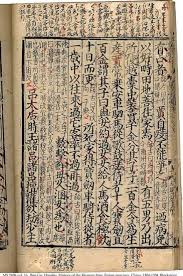 In Frances Wood’s: The Silk Road: Two Thousand Years in the Heart of Asia, chapter four is about a group of nomads inhabiting China’s northwestern borders and the Han Dynasty (Chinese). This group of nomads known as the Xiongnu has no fixed home and moves according to the seasons from place to place in search for food, water, and grazing land. The Chinese highly disliked this group of people and their Chinese two-character name literally means ‘fierce slaves.’ “The Chinese described the Xiongnu to be good for nothing because they live in the desert and grow in the land that produces no food. They have no houses to shelter themselves, and make no distinction between men and women. They take the entire wilderness as their village and the tents as their homes. They wander to meet in order to exchange goods and stay for a while in order to herd cattle (Wood 50).” Interestingly enough, despite of the way the Chinese viewed them, during the Han Dynasty, the Xiongnu still managed to have power over the Chinese and acquired many of their expensive silk and ornaments. These annual ‘tribute gifts’ amounted to ten percent of the Chinese state revenues.